AI and the Fight Against Veterinary Burnout
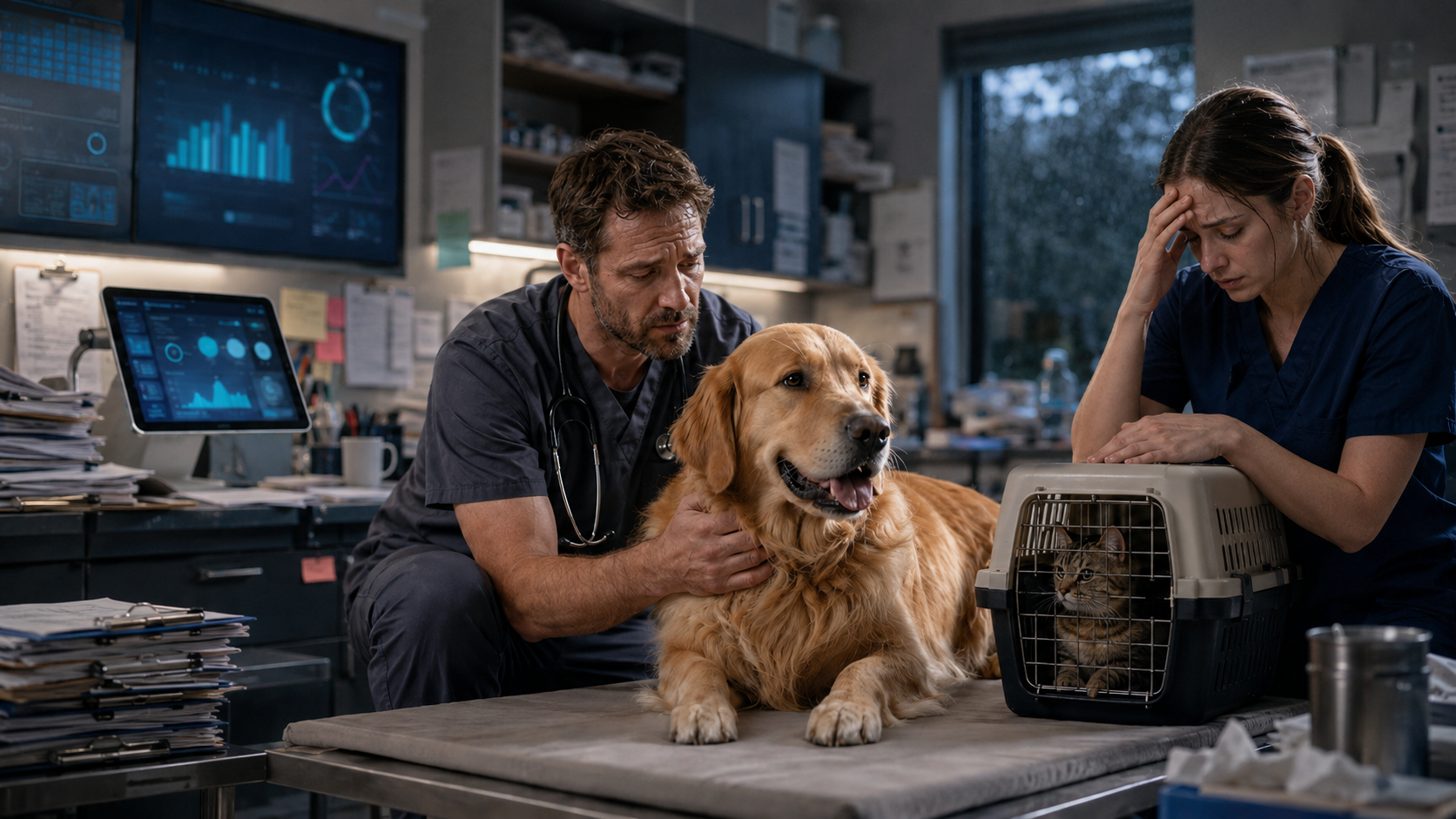
Veterinary medicine has been talking about burnout for years.
For much of that time, the responsibility seemed to fall on the individual. Clinicians were encouraged to become more resilient, manage stress better, and find healthier ways to cope.
Those things matter. But they cannot fix an unhealthy system.
Veterinarians and veterinary technicians continue to carry heavy caseloads, long hours, staffing shortages, emotionally difficult cases, demanding client conversations, and extensive documentation. Many reach the end of the day with little energy left for themselves or their families.
The profession is beginning to acknowledge that reality.
According to a 2026 veterinary-industry trends report, the share of practices prioritizing AI, automation, and upgraded practice-management systems increased from 11% in 2025 to 27% in 2026.
The increase matters. Not because technology will solve burnout, but because practices are looking more seriously at the work surrounding care.
AI tools can now help with medical documentation, appointment scheduling, billing, client communication, and workflow coordination. These are not the moments that draw people into veterinary medicine, but they consume a meaningful part of the working day.
Documentation is one of the clearest opportunities.
A survey of veterinary professionals using AI-powered administrative tools found that many users felt more in control of their time and reported improvements in burnout or work-life balance. The tools helped reduce the burden of medical records while supporting more consistent client communication.
The potential benefit is straightforward: less time completing repetitive work and more time caring for animals, speaking with families, and applying clinical judgment.
But that outcome is not guaranteed.
A practice can save an hour through automation and immediately fill it with more appointments. Productivity may increase while the people doing the work become even more exhausted.
Poorly designed or badly integrated tools can also create new problems. A clinician who must repeatedly correct inaccurate notes has not been given time back. The administrative burden has simply changed shape.
Technology should therefore be judged by what it returns to the team, not only by what it produces for the organization.
The strongest approach combines better tools with better leadership.
Veterinary workplace research increasingly treats burnout as a problem shaped by workload, team culture, communication, leadership, and how people are allowed to use their skills. The American Veterinary Medical Association similarly recommends combining organizational change with team involvement and systematic workload management.
AI can support that work. It cannot replace adequate staffing, reasonable schedules, psychological safety, fair compensation, or compassionate leadership.
That responsibility belongs to practice owners and leaders.
Teams should help choose and test the systems they are expected to use. Their experience should determine whether a tool genuinely reduces friction or merely moves it elsewhere.
The recent growth in veterinary AI adoption is encouraging because it signals a willingness to reconsider how the work gets done.
But the goal cannot simply be a more efficient practice.
The goal should be a more sustainable profession—one in which technology gives veterinary professionals more time for the animals, people, and human connection that brought them to the work in the first place.
Ravi Tandra, CEO
ProvenBase